Quick answer
Caviar is the lightly salted roe (eggs) of sturgeon. True caviar comes only from sturgeon species, and it is considered one of the world’s most luxurious foods. The three classic types (Siberian, Oscietra and Beluga) range from clean and affordable to rich, rare and expensive.
Few foods carry the mystique of caviar. It has graced royal banquets and Michelin tables for centuries, yet for many people it remains a mystery: why does it cost what it does, which type should you buy, and how should you actually eat it? This guide answers all of that in plain English. As a Royal Warrant holder, caviar supplier to restaurants including the three-Michelin-starred Waterside Inn, and the first UK company to DNA-test all of its caviar, King’s Fine Food is well placed to help you buy caviar with complete confidence, whether it is your first tin or a long-held taste.
What is caviar, exactly?
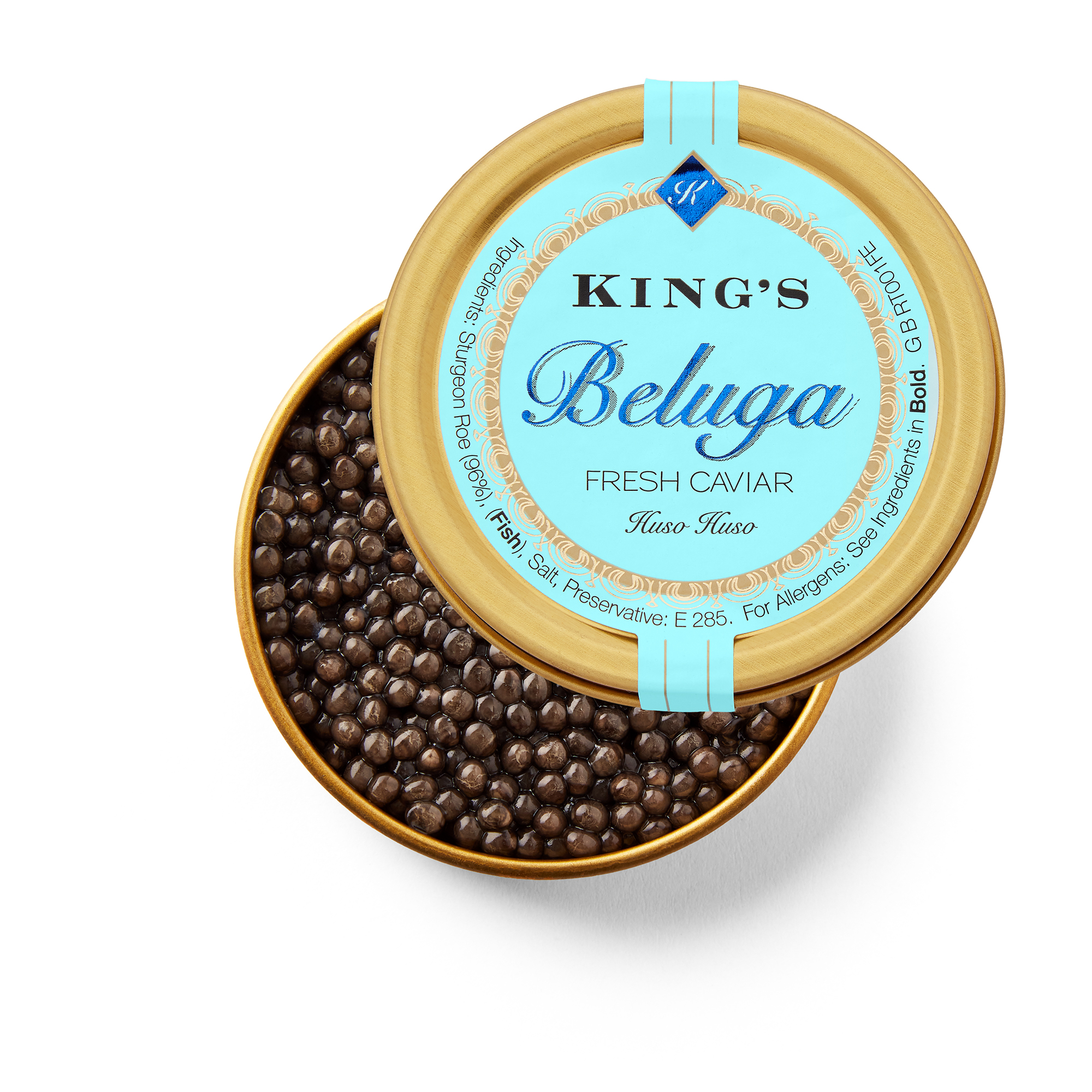
Caviar is the salted roe (eggs) of sturgeon, an ancient family of fish that has swum the earth’s rivers and seas since the age of the dinosaurs. The roe is harvested, lightly cured with salt in a process known as malossol (Russian for “little salt”), and packed into tins. That gentle salting is what separates true caviar from other fish roe: it preserves the eggs while allowing their delicate, buttery, faintly briny flavour to shine.
Strictly speaking, the word “caviar” refers only to sturgeon roe. The eggs of other fish (salmon, trout, lumpfish, herring) are correctly called fish roe rather than caviar, though they are delicious in their own right and far more affordable. If you would like the full background, our companion piece on the things to know about caviar goes deeper still.
The main types of caviar
Most caviar sold in the UK comes from farmed sturgeon, a sustainable practice that has taken pressure off wild populations, which are now protected. The three classic varieties you will encounter are these:
Beluga
The most famous and most expensive of all, Beluga caviar comes from the Beluga sturgeon and is prized for its large, soft, pale-grey pearls and exceptionally smooth, creamy flavour. Because the Beluga sturgeon takes up to two decades to mature, the caviar is rare and commands the highest prices.
Oscietra
For many connoisseurs, Oscietra caviar is the connoisseur’s choice, medium-sized golden-to-brown eggs with a firm pop and a famously nutty, almost walnut-like flavour. It offers arguably the best balance of quality, character and value, which is why it is one of our most popular caviars. The rare, lighter Golden Oscietra is more prized still.
Siberian
Siberian sturgeon caviar is an excellent entry point, smaller, darker eggs with a clean, classic caviar taste and a price that makes it ideal for first-timers and for entertaining. Imperial caviar sits at the more refined end of the range for those wanting to explore further.
Kaluga and Sevruga
Beyond the big three, two more varieties are well worth knowing. Kaluga (sometimes called ‘river Beluga’) comes from the Kaluga sturgeon and offers large, glossy eggs with a rich, buttery flavour that rivals Beluga at a gentler price. Sevruga caviar has smaller, darker grey eggs and an intense, distinctly briny taste much loved by traditionalists. King’s also offers rarer grades such as Golden Oscietra, Imperial, Platinum and the legendary Almas, so there is a caviar for every palate and occasion across the full collection.
Caviar types compared
| Type | Egg & taste | Relative price | Best for |
|---|---|---|---|
| Siberian | Small, dark; clean, classic | £ | First-timers & entertaining |
| Sevruga | Small, grey; intense, briny | ££ | Traditionalists |
| Oscietra | Medium, golden; nutty, buttery | £££ | Enthusiasts (our most popular) |
| Kaluga | Large, glossy; rich, buttery | ££££ | Beluga lovers on a budget |
| Beluga | Large, pale; smooth, creamy | £££££ | The ultimate luxury |
(Prices are relative. As an example, King’s Oscietra starts at around £17.50 for a 10g taster.)
Beluga vs Oscietra: which should you choose?
This is the great caviar debate. Beluga is the rarest and most expensive, with large, soft, pale-grey pearls and an exceptionally smooth, creamy, almost mild flavour, it is the choice when nothing but the very best will do, and price is not the deciding factor. Oscietra, by contrast, has a firmer egg with a more pronounced, nutty, complex character that many connoisseurs actually prefer, at a fraction of the price. Our advice: if you want a showstopper for a once-in-a-lifetime occasion, choose Beluga; if you want the best balance of flavour, character and value (and a caviar you will happily buy again) choose Oscietra. Beginners should start with Siberian or Oscietra before working up to Beluga.
How much does caviar cost in the UK?
Caviar is priced by weight and grade, and prices vary considerably between species. As a real-world example, King’s Oscietra runs from around £17.50 for a 10g taster up to £1,750 for a 1kg tin, so there is an entry point for almost any budget. As a broad guide, Siberian and classic Oscietra represent the most accessible end of the market, Kaluga, premium Oscietra and Imperial sit in the middle, and Beluga and Almas occupy the top (note that the rarest grades, including Beluga, can sell out and come in and out of stock through the year). A small 10–30g tin is the perfect way to try a variety; 50g and larger tins suit sharing and special occasions. The reasons caviar costs what it does are simple: sturgeon take many years to mature (King’s Oscietra fish are 9–100 years old at harvest), farming them sustainably is labour-intensive, and skilled hand-grading is required for every tin. You can see current pricing across the full range on our caviar collection page.
How to buy caviar you can trust
Caviar is one of the most counterfeited luxury foods in the world, which makes provenance everything. Sturgeon are, in fact, the most threatened group of species on the IUCN Red List (a 2022 reassessment found that all 26 remaining sturgeon species are at risk of extinction, up from 85% in 2009) which is why wild sturgeon fishing was banned in 2008. All legitimate caviar today is therefore farmed and traded under CITES rules, with strict labelling and traceability. King’s Fine Food was the first UK food company to introduce routine DNA testing of all its caviar, and works closely with Trading Standards and Animal Health, so you can be certain that what is on the label is what is in the tin. When buying caviar anywhere, look for a clear CITES code, transparent species and origin information, and a seller who can answer questions about how the roe was produced.
Recommended from King’s
Our most popular caviar and a perfect place to start: golden, nutty and buttery, hailed by Tom Parker-Bowles as ‘the greatest farmed in the world’. DNA-tested and fully CITES-compliant. Royal Warrant holder.
How to eat and serve caviar
Caviar should be treated with a little reverence and absolutely no fuss. The golden rules:
- Serve it cold, keep the tin on crushed ice until the moment of serving
- Never use a metal spoon, which gives a metallic taste; use mother-of-pearl, bone or horn (a tradition we explain in this guide)
- Eat it simply, a small amount on the back of the hand, on a blini, or on a lightly buttered toast point
- Classic King’s accompaniments include crème fraîche or sour cream, blinis, unsalted crackers, quail eggs and even baked or boiled new potatoes, though purists need none of them
- Pair with chilled Champagne, English sparkling wine, dry white wine or ice-cold vodka

How much should you serve? As a guide, allow 30–50g per person if caviar is eaten on its own, or around 5g per canapé. A common beginner’s mistake is to overwhelm the caviar with strong flavours, so start with a clean tasting (caviar on its own, or on a neutral blini) to appreciate what you have bought. For inspiration, our caviar pairing guide is full of recipes for every occasion.
How to store caviar
Caviar is perishable and demands the coldest part of your fridge, ideally between 0°C and 4°C. Keep an unopened tin in the back of the fridge and consume it by the date on the tin; once opened, eat it within two to three days. Never freeze caviar, which ruins the texture. Our detailed guide on storing your caviar walks through everything, including how to keep it cool when serving.
Is caviar good for you?
Beyond the indulgence, caviar is genuinely nutritious. It is rich in omega-3 fatty acids, a good source of protein, and contains vitamin B12, selenium and other minerals. It is, of course, also high in salt, so it is best enjoyed in the small quantities its price tends to encourage anyway.
A brief history of caviar
Caviar’s reputation as the ultimate luxury is centuries in the making. The word itself comes from a Persian term meaning ‘cake of strength’, and it was the Persians (not, as is often assumed, the Russians) who first extracted and ate it in the 16th century, believing it had healing properties. Curiously, in the 18th century caviar was still regarded as food of the poor, until royal chefs introduced it to the Russian Tsars and nobility and set in motion its rise as a delicacy. Demand eventually outstripped the wild sturgeon’s ability to recover, and in 2008 wild sturgeon fishing was banned. Today almost all fine caviar comes from carefully managed farms under CITES protection, which keeps this remarkable food on the table while safeguarding wild stocks. Understanding that story helps explain both the price and the reverence with which caviar is still treated.
What to pair with caviar
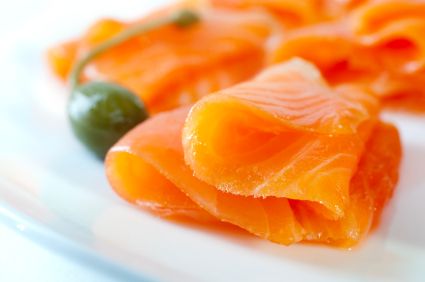
While true connoisseurs often eat caviar entirely unadorned, it sits beautifully within a wider spread. It is a natural partner for smoked salmon, oysters and other fish roe, and it makes an unforgettable canapé on a blini with a dot of crème fraîche. For drinks, the high acidity and fine bubbles of Champagne or English sparkling wine cut through the richness of the roe perfectly, while traditionalists swear by ice-cold vodka. Avoid anything strongly tannic or heavily oaked, which will overwhelm the caviar’s delicacy.
Common caviar mistakes to avoid
- Using a metal spoon, which leaves a metallic taste, always use mother-of-pearl, bone or horn
- Serving it warm, caviar should be kept on ice right up to the moment of eating
- Drowning it in toppings, which masks the flavour you have paid for
- Freezing it, which permanently damages the texture of the eggs
- Buying far more than you need, a small tin shared is better than a large tin wasted
Frequently asked questions
What is caviar made of?
Caviar is the lightly salted roe (eggs) of sturgeon. The eggs are harvested and cured with a small amount of salt (the malossol method) to preserve them while keeping their delicate flavour.
What is the best type of caviar for a beginner?
Siberian sturgeon caviar or classic Oscietra are ideal starting points, both offer authentic caviar flavour at a more accessible price than Beluga. Start with a 30g tin to find your preference.
Why is caviar so expensive?
Sturgeon take many years (sometimes decades) to mature, sustainable farming is labour-intensive, and every tin is hand-graded. Beluga is the most expensive because the fish is the slowest to mature and the rarest.
How should you eat caviar?
Serve it cold with a non-metal spoon, in small amounts, on a blini or toast point. Keep accompaniments simple and pair with Champagne, English sparkling wine or chilled vodka.
How much caviar do I need per person?
As a guide, allow 30–50g per person if caviar is served on its own, or around 5g per canapé. For four people sharing as a treat, a 50–125g tin works well; for four people eating caviar as a course, plan on 125–200g.
Can you freeze caviar?
No. Freezing ruptures the delicate eggs and ruins the texture. Keep caviar in the coldest part of the fridge (0–4°C), eat an opened tin within two to three days, and never freeze it.
How long does caviar last?
An unopened tin keeps until the date on the tin if stored at 0–4°C. Once opened, caviar is best eaten within two to three days.
Does caviar taste fishy?
Good caviar should not taste strongly fishy. Expect a clean, buttery, subtly briny flavour with a pleasant ‘pop’. An overly fishy or harsh taste is usually a sign of poor quality or age.
Where can I buy the best caviar in the UK?
Buy from a specialist that can prove provenance. King’s Fine Food is a Royal Warrant holder and the first UK company to DNA-test all of its caviar, you can buy premium caviar online with full CITES traceability and UK delivery.
What is the rarest caviar?
Almas caviar (the pale roe of older Beluga sturgeon) is among the rarest and most expensive in the world. King’s offers it alongside other prestige grades such as Golden Oscietra and Platinum.
Can children eat caviar?
Caviar is safe for most children to eat in small amounts, but it is high in salt, so keep portions tiny. As with any new food, introduce it cautiously if there is any history of fish allergy.
Ready to taste the difference? For some of the best caviar in the UK, browse our full caviar collection or buy premium caviar online, from accessible Siberian to the legendary Beluga, every tin is DNA-tested, CITES-compliant and backed by a Royal Warrant.
Related reading
- Things to Know About Caviar
- Caviar Pairing Guide: Recipes for Every Occasion
- Storing Your Caviar
- Understanding CITES and Caviar
- Why Caviar DNA Testing Matters
- The Tradition of Mother of Pearl and Caviar
King’s Fine Food donates 10% of all net profits to charity, with the majority going to the John King Brain Tumour Foundation, whose vision is to improve outcomes for adult and paediatric patients with brain diseases and disorders.